
Our Location

Sunshine Surgical Hospital, Memnagar, Ahmedabad

Call Us

+91 90166 06070

Author name: Sunshine Surgical Hospital

Proctology

Say Goodbye to Pain: Laser Treatment for Fissures at Sunshine Surgical Hospital | Sunshine Surgical Hospital 

Say Goodbye to Pain: Laser Treatment for Fissures at Sunshine Surgical Hospital Introduction Anal fissures — small tears in the lining of the anus — can cause severe pain, bleeding, and discomfort during bowel movements. While medications and home remedies may provide temporary relief, chronic fissures often require a more permanent solution. At Sunshine Surgical Hospital, under the expert care of Dr. Krunal Solanki, we offer minimally invasive laser treatment that ensures quick healing, minimal pain, and faster recovery.  What Is an Anal Fissure? An anal fissure is a cut or tear in the skin of the anal canal, often caused by passing hard stools, chronic constipation, or excessive straining. It can affect people of all ages and is commonly associated with symptoms such as:  Sharp pain during or after bowel movements  Bright red blood on the stool or toilet paper  Itching or irritation around the anus  A visible crack or tear  If left untreated, acute fissures may become chronic and cause persistent discomfort and infection.  Why Choose Laser Treatment for Fissures? At Sunshine Surgical Hospital, we specialize in Laser Sphincterotomy, an advanced, non-invasive treatment for fissures performed by Dr. Krunal Solanki, one of the leading proctology experts in the region.  Painless Procedure: Laser treatment is virtually painless, both during and after the procedure. It reduces trauma to surrounding tissues.  Quick Recovery: Most patients resume normal activities within 24-48 hours after the procedure.  Minimal Bleeding & Infection Risk: The laser cauterizes as it cuts, minimizing bleeding and lowering the risk of infection.  No Hospital Stay Required: It is a daycare procedure. You can go home the same day.  High Success Rate: Laser treatment boasts a high success rate, especially for chronic fissures that do not respond to conventional treatment.  The Laser Procedure: What to Expect Consultation & Diagnosis Dr. Krunal Solanki conducts a detailed examination and may recommend diagnostic tests to confirm the severity of the fissure.  Laser Sphincterotomy Under local or general anesthesia, a laser is used to gently reduce tension in the internal anal sphincter muscle, promoting faster healing.  Post-Procedure Care You’ll receive detailed post-care instructions for diet, hygiene, and recovery. Most patients resume their normal routine within a couple of days Why Choose Sunshine Surgical Hospital? Led by Dr. Krunal Solanki – Trusted Laser Proctology Specialist  Advanced Surgical Technology  Tailored Patient Care Plans  Focus on Quick Recovery and Minimal Discomfort  Final Thoughts Don’t suffer in silence. Chronic fissures can be both painful and frustrating, but with laser treatment by Dr. Krunal Solanki at Sunshine Surgical Hospital, you have a safe, fast, and permanent solution. Let us help you return to a pain-free life with confidence. 
Hernia

Understanding Inguinal Hernia Repair: A Safe and Effective Solution | Sunshine Surgical Hospital

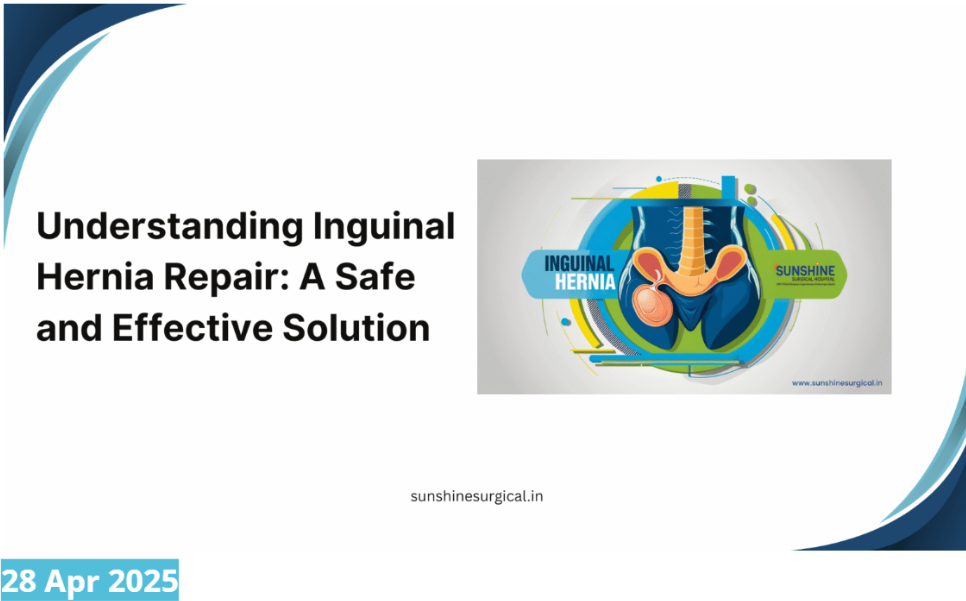
Understanding Inguinal Hernia Repair: A Safe and Effective Solution Sunshine Surgical Hospital Introduction Inguinal hernias are a common condition that can cause discomfort and complications if not treated. If you’ve been diagnosed with an inguinal hernia or are experiencing symptoms, surgery might be the most effective solution. In this blog, we’ll explain what inguinal hernias are, the surgical options available, and what you can expect during and after the procedure. What is an Inguinal Hernia? An inguinal hernia occurs when a part of the intestine or fatty tissue pushes through a weak spot in the abdominal wall, usually in the groin area. This type of hernia is most common in men but can also occur in women. It may present as a visible bulge or swelling in the groin, which can cause pain, especially when coughing, lifting heavy objects, or participating in physical activity. When is Surgery Necessary? Not all inguinal hernias require surgery, especially if they’re small and asymptomatic. However, surgery is often recommended if the hernia causes discomfort, grows over time, or presents a risk of complications like strangulation (when blood supply to the herniated tissue is cut off). Surgery is the most effective way to treat an inguinal hernia and prevent these issues from occurring. Types of Inguinal Hernia Repair Surgery There are two main types of surgery to repair an inguinal hernia: Open Hernia RepairThis is the traditional method of hernia repair. The surgeon makes an incision in the groin area to access the hernia. The bulging tissue is pushed back into place, and the weakened area of the abdominal wall is reinforced with stitches and/or mesh. This procedure provides a clear view of the hernia and is effective for most cases. Laparoscopic (Minimally Invasive) Hernia RepairLaparoscopic surgery is a minimally invasive technique that involves smaller incisions. A tiny camera (laparoscope) is inserted through one of the incisions to help the surgeon repair the hernia using specialized instruments. Laparoscopic surgery often results in less pain, smaller scars, and a faster recovery time compared to open surgery. Both methods aim to repair the hernia and reinforce the abdominal wall to prevent recurrence. Your surgeon will recommend the best approach based on the size and location of the hernia and your overall health. What to Expect During Inguinal Hernia Repair Surgery Before the Surgery:Prior to the surgery, your surgeon will evaluate the hernia’s size and location through a physical exam and possibly imaging tests. You’ll be given specific instructions on how to prepare for the procedure, including when to stop eating or drinking before surgery and whether to adjust any current medications. During the Surgery: Anesthesia: The surgery will be performed under general anesthesia (where you are asleep) or local anesthesia with sedation, depending on the method used and the surgeon’s recommendation. Hernia Repair: The surgeon will repair the hernia by pushing the protruding tissue back into place. In most cases, mesh is used to reinforce the area and prevent the hernia from recurring. Incision Closure: After the hernia is repaired, the incisions will be closed using stitches or staples, and a sterile dressing will be applied to the area. After the Surgery:You will be monitored in a recovery area to ensure you wake up safely from anesthesia. Pain medications will be provided to manage any discomfort. Most patients are discharged the same day or within a few hours. Recovery and Aftercare The recovery process varies depending on the type of surgery performed, but here is a general timeline: First Few Days: Expect some soreness at the incision sites, which can be managed with prescribed pain medications. First Week: Most patients can walk around and perform light activities but should avoid heavy lifting and strenuous exercise. Two to Four Weeks: Patients can usually return to normal activities but should still avoid heavy lifting and high-impact exercise. Full Recovery: Full recovery typically takes about 6 to 8 weeks, depending on individual healing and the type of surgery. Potential Risks and Complications While inguinal hernia repair is a safe procedure, like all surgeries, it does carry some risks, including: Infection at the incision site Bleeding Nerve injury or numbness Hernia recurrence (although this is rare, especially when mesh is used) Your surgeon will discuss these risks with you and take every step to minimize complications. Why Choose Sunshine Surgical Hospital? At Sunshine Surgical Hospital, we pride ourselves on providing top-quality care for patients undergoing inguinal hernia repair. Our skilled surgeons use the latest techniques and technology to ensure a successful outcome and a comfortable recovery. We also offer personalized care, guiding you through each step of the process, from your initial consultation to post-operative care. Meet Our Expert Surgeons Our team of experienced surgeons specializes in minimally invasive hernia repair surgeries. They are dedicated to offering the highest standard of care, ensuring that you receive the best treatment possible. With years of expertise and advanced training, our doctors are here to support you throughout your hernia repair journey. Book Your Consultation If you’re experiencing symptoms of an inguinal hernia or have been diagnosed with one, don’t wait to seek treatment. Consult with one of our expert surgeons today to discuss your options for repair. You can schedule an appointment online or contact us at +91 90166 06070 to speak with our team and take the first step toward recovery. Conclusion Inguinal hernia repair is a safe and effective procedure that can relieve pain and prevent serious complications. Whether you undergo an open repair or laparoscopic surgery, the procedure has a high success rate, and most patients experience a smooth recovery. If you’re ready to take the next step in your hernia repair journey, reach out to Sunshine Surgical Hospital. Our expert team is here to guide you through the process and help you get back to living your life pain-free.

Robotic Surgery

A Complete Guide to Robotic Hernia Repair | Sunshine Surgical Hospital

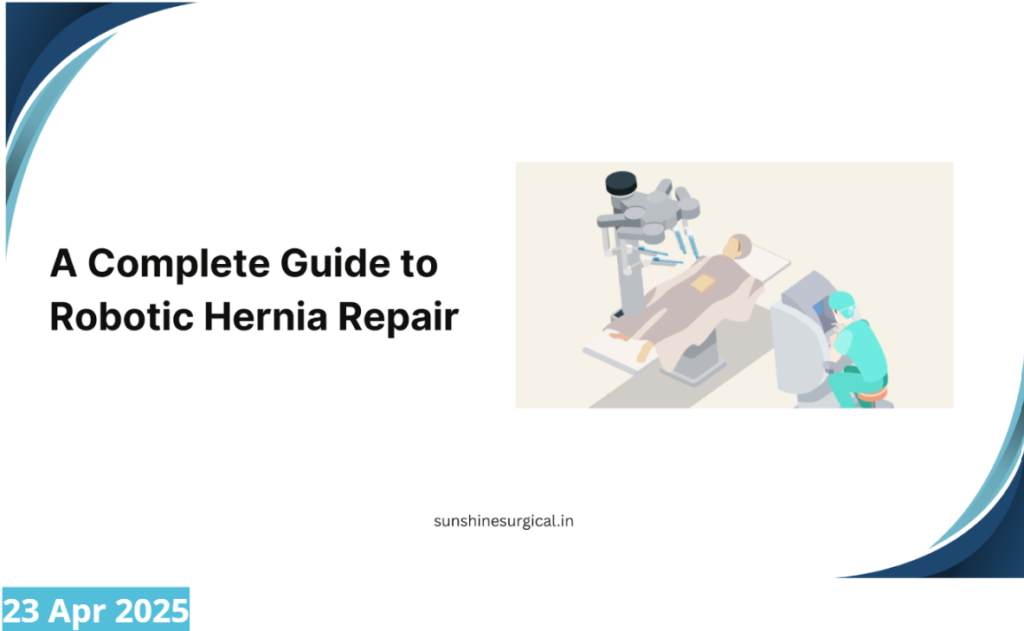
A Complete Guide to Robotic Hernia Repair Sunshine Surgical Hospital Introduction Hernia repair is one of the most frequently performed surgeries worldwide. Thanks to advancements in medical technology, robotic-assisted hernia repair offers patients a safer, more precise, and less invasive option. This comprehensive visual guide breaks down everything you need to know about robotic hernia surgery — from diagnosis to recovery. What Is a Hernia? A hernia occurs when an internal organ or tissue pushes through a weak spot in the muscle or surrounding tissue wall. Common types include: Inguinal Hernia – Occurs in the groin Umbilical Hernia – Occurs near the belly button Incisional Hernia – Appears at the site of a previous surgical incision Hiatal Hernia – Part of the stomach moves into the chest cavity Traditional vs. Robotic Hernia Surgery Aspect Traditional Surgery Robotic Surgery Incision Larger or multiple small cuts 3–4 tiny incisions Surgeon’s View 2D camera High-definition 3D view Control Manual instruments Robotic arms with enhanced precision Recovery Longer, more discomfort Quicker and smoother Scarring More visible Minimal and discreet What Is Robotic Hernia Surgery? Robotic hernia surgery is a minimally invasive procedure where the surgeon operates using robotic arms controlled from a console. This system provides better visualization, increased dexterity, and unmatched precision, especially for complex hernias. Step-by-Step Overview of the Procedure Pre-operative EvaluationImaging and consultation help determine the type and severity of the hernia. Anesthesia and SetupGeneral anesthesia is administered, and small incisions are made. Robotic Instrument PlacementRobotic arms are inserted through the incisions. Hernia RepairThe tissue is repositioned and mesh may be applied for reinforcement. Closure and RecoveryThe instruments are removed, and the incisions are closed. Benefits of Robotic Hernia Surgery Minimally invasive with reduced tissue trauma Smaller incisions, resulting in minimal scarring Lower risk of complications such as infection or bleeding Faster recovery time, allowing return to normal activities sooner Reduced pain and less need for pain medication Who Is a Good Candidate? Robotic hernia surgery is ideal for: Patients with recurrent or complex hernias Individuals with a higher body mass index Those looking for quicker recovery and less downtime Not all hernias or patients are suitable for robotic repair, so a thorough consultation with a specialist is necessary. What to Expect After Surgery Discharge the same day or within 24 hours Return to light activities in about a week Complete recovery typically within 2 to 3 weeks Follow-up appointment to monitor healing Final Thoughts Robotic hernia repair is at the forefront of modern surgical care, offering unmatched precision, faster recovery, and better outcomes for patients. It’s an ideal option for those seeking a minimally invasive approach with minimal disruption to their daily life. At Sunshine Surgical Hospital, we are proud to offer state-of-the-art robotic-assisted hernia surgery performed by experienced surgeons using the latest technology. Our team is committed to delivering personalized care, ensuring safety, comfort, and successful recovery at every step. If you’re considering hernia surgery, schedule a consultation with our specialists to explore whether robotic hernia repair is the right option for you.

Proctology

Stapler Circumcision: A Modern Approach to an Age-Old Procedure | Sunshine Surgical Hospital 

Stapler Circumcision: A Modern Approach to an Age-Old Procedure Sunshine Surgical Hospital Introduction Circumcision is one of the oldest surgical procedures known to mankind, performed for religious, cultural, and medical reasons. In recent years, traditional methods have been replaced by advanced, safer, and quicker techniques. One such innovation is Stapler Circumcision — a modern, minimally invasive approach that offers several advantages over conventional methods. What is Stapler Circumcision? Stapler circumcision, also known as device-assisted circumcision, uses a disposable surgical stapler to remove the foreskin of the penis. The stapler is a specially designed instrument that cuts and seals the skin simultaneously using a silicone ring and surgical staples. The procedure is generally completed in just a few minutes under local or general anesthesia. How Does It Work? The stapler device has two parts: An inner bell that protects the glans (tip of the penis). An outer ring that cuts and staples the foreskin. Once the device is positioned, the foreskin is pulled over the inner bell. The outer ring is then placed and fired, which excises the foreskin while simultaneously applying staples to close the wound. The stapler is removed, and the ring typically falls off on its own within 7-10 days. Benefits of Stapler Circumcision Minimal Bleeding: As the device seals blood vessels while cutting, there is minimal to no blood loss. Faster Recovery: Most patients resume normal activities within a few days. Reduced Pain: The procedure is quick, and post-operative pain is generally milder compared to traditional circumcision. Cosmetic Outcome: Offers a neater and more symmetrical result. Lower Risk of Infection: Due to shorter surgery time and better wound closure Who Can Opt for Stapler Circumcision? This method is suitable for males of all age groups — children, adolescents, and adults. It is particularly recommended for individuals with: Phimosis (tight foreskin) Recurrent balanitis (inflammation of the glans) Personal or religious preferences for circumcision Post-Operative Care Keep the area clean and dry. Avoid strenuous physical activity and sexual activity until fully healed. Wear loose-fitting underwear. Take prescribed medications to manage pain or prevent infection. The silicone ring will naturally fall off in about a week. Possible Side Effects While rare, some patients may experience: Mild pain or swelling Temporary redness or discomfort Delayed ring detachment (in rare cases, may require medical assistance) Stapler circumcision is a safe, efficient, and aesthetically pleasing alternative to traditional surgical circumcision. With faster recovery, minimal discomfort, and excellent cosmetic results, it’s quickly becoming the preferred choice among patients and healthcare providers. For those in Ahmedabad seeking expert care, Sunshine Surgical Hospital stands out as a premier destination. Located at 403-405 Copper Leaf Complex, near Bhuyangdev Cross Road, Sola Road, Memnagar, Ahmedabad, Gujarat 380063 , the hospital offers state-of-the-art surgical facilities and a team of experienced professionals dedicated to patient well-being. Under the leadership of Dr. Krunal Solanki, a renowned laparoscopic and endoscopic surgeon, Sunshine Surgical Hospital has been providing advanced surgical solutions, including stapler circumcision, ensuring optimal outcomes with compassionate care. If you’re considering circumcision for yourself or a loved one, trust Sunshine Surgical Hospital for expert guidance and a seamless experience. For appointments or more information, visit our official website or contact at +91 86420 08008.

Proctology

A Complete Guide to Laser Treatment for Piles | Sunshine Surgical Hospital 

A Complete Guide to Laser Treatment for Piles Sunshine Surgical Hospital Introduction Piles, also known as hemorrhoids, are swollen blood vessels in the rectal or anal area that cause discomfort, pain, and bleeding. While conservative treatments such as dietary changes and medications may help in mild cases, advanced or chronic piles often require medical intervention. One of the most effective and modern solutions today is laser treatment for piles. This guide covers everything you need to know about it. What Are Piles? Piles are categorized into two main types: Internal Piles: Located inside the rectum, usually painless but can bleed. External Piles: Found around the anus and can be painful, especially if a blood clot forms. Common symptoms include: Bleeding during bowel movements Itching or irritation in the anal region Pain and discomfort Swelling or lumps near the anus What is Laser Treatment for Piles? Laser treatment is a minimally invasive surgical technique where a laser beam is used to shrink or remove the swollen hemorrhoidal tissue. It is a preferred choice due to its precision, reduced pain, and faster recovery time. Benefits of Laser Treatment for Piles Minimally Invasive: No cuts or stitches involved. Less Pain: Laser causes less tissue damage compared to traditional surgery. Quick Procedure: Takes around 30 minutes or less. Same-Day Discharge: Most patients go home the same day. Faster Recovery: Resume normal activities in 2–3 days. Lower Risk of Recurrence: High precision reduces the chances of the problem returning. Who is Eligible for Laser Treatment? Laser treatment is generally recommended for: Grade II and III internal hemorrhoids Chronic piles that don’t respond to other treatments Patients seeking a less painful and quicker alternative to open surgery A proctologist or colorectal surgeon will evaluate your condition to determine suitability. The Procedure: Step-by-Step Diagnosis: A physical exam and possibly a proctoscopy to assess the grade and type. Preparation: Light anesthesia is administered. No major prep required. Treatment: A laser probe is inserted to target and shrink the hemorrhoidal tissue. Post-op Care: Monitoring for a few hours before discharge. Aftercare and Recovery Diet: High-fiber diet and plenty of fluids Hygiene: Keep the anal area clean and dry Medication: Painkillers and stool softeners if prescribed Rest: Avoid heavy lifting for a few days Full recovery typically takes 5–7 days. Risks and Side Effects Although rare, potential risks may include: Mild bleeding or discharge Infection (minimized with proper care) Temporary discomfort during bowel movements Final Thoughts Laser treatment for piles is a safe, effective, and advanced option that offers a hassle-free solution for those suffering from chronic hemorrhoids. It combines the benefits of modern technology with minimal downtime, making it an ideal choice for many. If you’re experiencing persistent symptoms, consult a specialist to explore whether laser surgery is the right option for you.

Cancer

Surgical Oncology for Cancer: Procedures and Recovery | Sunshine Surgical Hospital 

Surgical Oncology for Cancer: Procedures and Recovery Sunshine Surgical Hospital Introduction Cancer is a word that brings with it uncertainty, fear, and a journey that no one chooses. At Sunshine Surgical, we believe in empowering our patients with knowledge, compassion, and world-class surgical care. Surgical oncology plays a crucial role in diagnosing and treating various forms of cancer, offering hope and healing to patients and their families. In this blog, we’ll walk you through what surgical oncology involves, common procedures, and what to expect during recovery. What is Surgical Oncology? Surgical oncology is a specialized branch of surgery focused on the diagnosis, staging, and treatment of cancer through surgical procedures. The goal is to remove cancerous tumors, nearby lymph nodes, or affected tissues to prevent the spread of the disease and improve survival rates. Surgeons at Sunshine Surgical work hand-in-hand with medical oncologists, radiologists, and other specialists to create personalized treatment plans that offer the best chance of recovery. Common Surgical Oncology Procedures 1. Tumor Resection This involves the removal of the tumor along with a margin of surrounding healthy tissue to ensure no cancer cells are left behind. It’s commonly used for breast, colon, lung, and liver cancers. 2. Biopsy A diagnostic procedure where a small sample of tissue is removed for analysis. A biopsy helps determine if the tumor is benign or malignant and guides treatment planning. 3. Lymph Node Dissection A diagnostic procedure where a small sample of tissue is removed for analysis. A biopsy helps determine if the tumor is benign or malignant and guides treatment planning. 4. Debulking Surgery When a complete tumor removal isn’t possible, debulking aims to remove as much of the tumor as possible to improve the effectiveness of other treatments like chemotherapy or radiation. 5. Palliative Surgery This is not aimed at curing cancer, but rather relieving symptoms and improving quality of life, especially in advanced cancer cases. The Recovery Process Recovery from surgical oncology procedures varies based on the type of surgery, overall health of the patient, and whether other treatments are involved. Here’s what most patients can expect: Hospital Stay Some surgeries require only a day or two of hospitalization, while others may need a longer stay. At Sunshine Surgical, we ensure a comfortable, hygienic, and supportive environment for recovery. Pain Management Pain and discomfort are normal after surgery. Our team provides effective pain management plans tailored to individual needs. Wound Care & Follow-ups Proper care of the surgical site is critical. Patients are guided on hygiene, signs of infection, and when to return for follow-ups or stitch removal. Nutrition & Physical Therapy Post-surgery nutrition and gentle exercises can help regain strength and promote healing. We provide consultations with dietitians and physiotherapists as needed. Emotional Support Recovery isn’t just physical. Cancer surgery can be emotionally overwhelming. At Sunshine Surgical, we offer counseling and connect patients with support groups to help them navigate their journey with strength and hope. Why Choose Sunshine Surgical? Expert Surgical Oncologists State-of-the-Art Facilities Multidisciplinary Team Approach Compassionate, Patient-Centered Care We understand that every cancer journey is unique. That’s why our approach is always tailored, transparent, and backed by years of experience in surgical excellence. Final Thoughts Surgical oncology is often a pivotal step in the fight against cancer. With the right medical team, advanced surgical techniques, and comprehensive post-operative care, patients can face the journey with confidence. At Sunshine Surgical, we are committed to being with you every step of the way — from diagnosis to recovery. If you or your loved one has been diagnosed with cancer and is considering surgical options, contact us today to schedule a consultation with our expert team.

Neurological

Neurological Disorders: What They Are, Symptoms & Types | Sunshine Surgical Hospital

Neurological Disorders: What They Are, Symptoms & Types Sunshine Surgical Hospital Introduction Neurological disorders affect millions of people worldwide and can significantly impact quality of life. These disorders are related to the brain, spinal cord, and nerves, which form the body’s nervous system. Understanding the basics of neurological disorders—their types and symptoms—can help in early diagnosis and better management. In this blog, we’ll explore what neurological disorders are, their common symptoms, and various types that people should be aware of. What Are Neurological Disorders? Neurological disorders are medical conditions that affect the nervous system, including the brain, spinal cord, and peripheral nerves. These conditions may result from structural, biochemical, or electrical abnormalities, leading to a range of symptoms like muscle weakness, seizures, or cognitive dysfunction. Common Symptoms of Neurological Disorders Identifying symptoms early can lead to quicker diagnosis and treatment. Here are some of the most common signs of neurological issues: Chronic headaches or migraines Sudden loss of vision or double vision Memory loss or cognitive decline Seizures or convulsions Muscle weakness or paralysis Numbness or tingling Difficulty speaking or understanding speech Poor coordination and balance Mood swings or personality changes These symptoms can vary widely depending on the specific neurological condition and its severity. Types of Neurological Disorders There are over 600 known neurological disorders. Below are some of the most common and well-known ones: Alzheimer’s Disease – A progressive neurodegenerative disorder that causes memory loss, confusion, and changes in behavior. It primarily affects older adultsParkinson’s Disease 2.  A chronic disorder that affects movement, often including tremors, stiffness, and slowed movement due to low dopamine levels. 3. Epilepsy- A condition characterized by recurring seizures caused by abnormal electrical activity in the brain. 4. Multiple Sclerosis (MS)- An autoimmune disease where the immune system attacks the protective covering of nerves, leading to communication problems between the brain and the rest of the body. 5. Stroke- Occurs when blood flow to a part of the brain is interrupted, leading to cell death and brain damage. It can cause paralysis, speech difficulties, and memory loss. 6. Migraine- Not just a headache—migraines are a neurological condition with symptoms like throbbing pain, sensitivity to light, and nausea. 7. Amyotrophic Lateral Sclerosis (ALS) – Also known as Lou Gehrig’s disease, this condition involves the gradual deterioration of motor neurons, leading to muscle weakness and paralysis. 8. Peripheral Neuropathy- A result of damage to the peripheral nerves, often causing pain, tingling, and numbness in the hands and feet. When Should You See a Neurologist? If you or someone you know experiences persistent or worsening neurological symptoms, it’s essential to consult a neurologist. Early intervention can slow disease progression and improve outcomes. Final Thoughts Neurological disorders can affect anyone—regardless of age or background. By recognizing the symptoms and understanding the different types, individuals can seek help early and improve their quality of life. Staying informed, maintaining a healthy lifestyle, and going for regular check-ups are crucial in the prevention and management of many neurological conditions. Stay Informed & Take Action Whether you’re a caregiver, a patient, or someone interested in health awareness, understanding neurological disorders is the first step toward better brain health. Book Your Appointment at Sunshine Surgical Hospital At Sunshine Surgical Hospital, we offer expert care for all kinds of neurological disorders. Our experienced neurologists and advanced diagnostic tools ensure accurate diagnosis and effective treatment plans tailored to your needs.

Copyright © 2026 Sunshine Surgical Hospital | Designed by EEG Technogeeks 

Scroll to Top