
Laser Surgery for Varicose Veins in Ahmedabad
What Is Laser Surgery for Varicose Veins?
Varicose veins are enlarged, twisted veins that commonly develop in the legs when blood does not flow efficiently back towards the heart. They may cause visible bulging veins, aching, heaviness, swelling, itching or skin changes around the affected area.
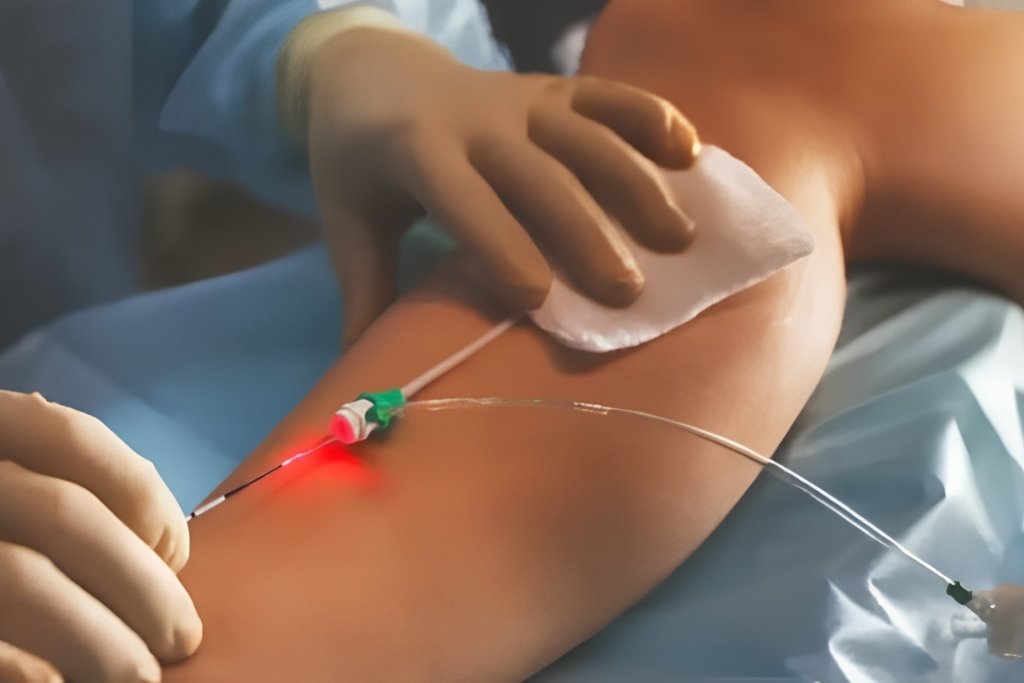
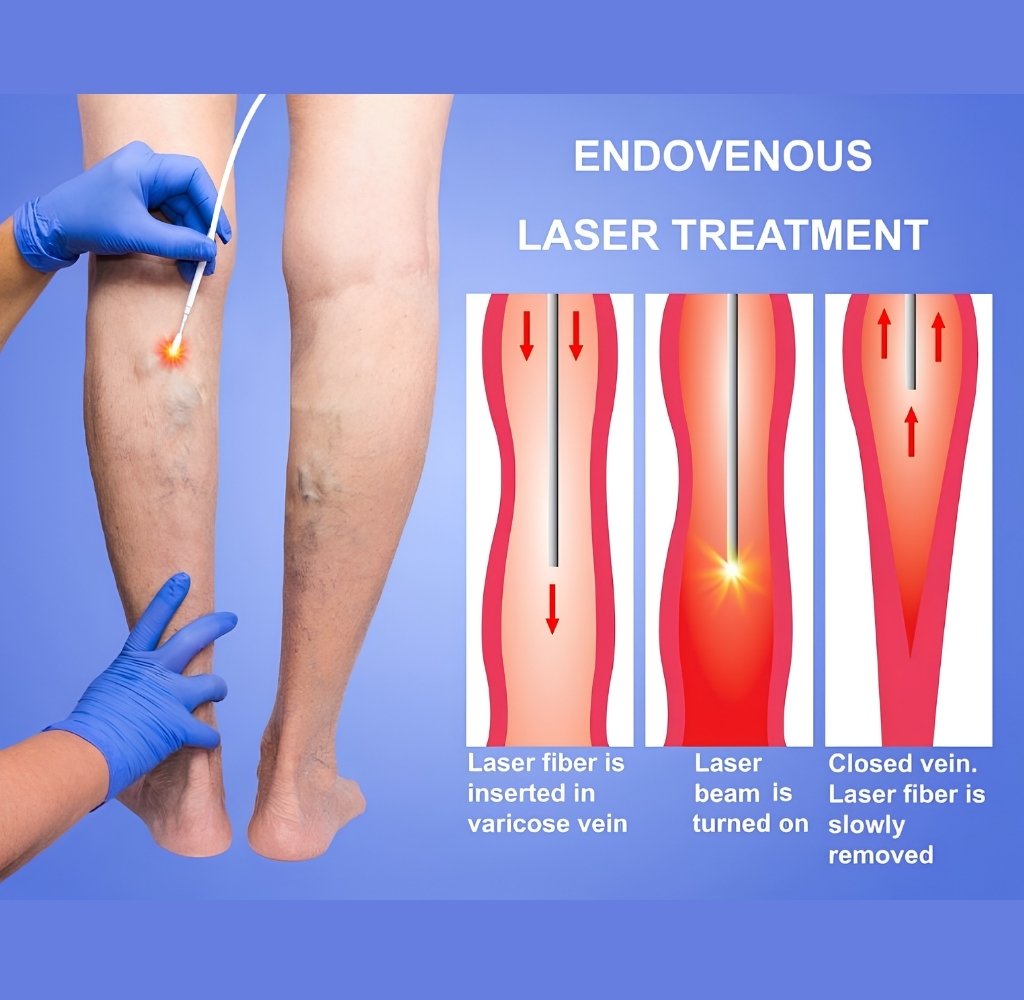
Laser Surgery for Varicose Veins in Ahmedabad is a minimally invasive treatment that uses controlled laser energy to close an abnormal superficial vein from within. The procedure is also known as endovenous laser treatment or endovenous laser ablation.
The affected vein is identified using ultrasound, and a thin catheter with a laser fibre is introduced through a small puncture. Laser energy is then delivered to the vein, causing it to close. Blood is redirected through healthier veins, while the treated vein gradually undergoes natural changes within the body.
When Is Laser Surgery for Varicose Veins Considered?
Laser treatment may be considered when varicose veins are associated with symptoms or underlying venous reflux and require treatment after vascular assessment.
01. Persistent Leg Pain
Aching, throbbing or discomfort in the legs, particularly after prolonged standing, may indicate symptomatic venous disease requiring evaluation.
02. Leg Swelling and Heaviness
Recurring swelling, heaviness or tiredness in the legs can occur when blood pools because of faulty valves in the affected veins.
03. Visible Enlarged Veins
Prominent, twisted or bulging veins may be assessed when they are associated with symptoms or evidence of underlying venous reflux.
04. Skin Changes
Darkening, itching, dryness or other changes around the ankle or lower leg can occur with longstanding venous disease and may require treatment.
05. Recurrent Superficial Vein Problems
Repeated inflammation or discomfort around abnormal superficial veins may require evaluation to identify the source of venous reflux.
06. Venous Ulceration
Longstanding venous disease can contribute to skin breakdown and ulcers around the lower leg, requiring assessment and treatment of the underlying circulation problem.
Laser vs Traditional Varicose Vein Surgery
Laser treatment and traditional vein surgery aim to manage abnormal veins, but they use different methods to achieve this.
|
Feature
|
Laser Varicose Vein Surgery
|
Traditional Vein Surgery
|
|---|---|---|
|
Treatment Method
|
Laser energy closes the affected vein
|
Vein is surgically removed
|
|
Surgical Access
|
Small puncture or tiny incision
|
Larger surgical access points
|
|
Vein Treatment
|
Vein is sealed from inside
|
Vein is physically removed
|
|
Postoperative Discomfort
|
Usually limited discomfort
|
May involve greater soreness
|
|
Recovery
|
Usually shorter recovery
|
Recovery may take longer
|
|
Treatment Selection
|
Depends on vein anatomy and reflux
|
Depends on vein anatomy and disease
|
How Is Laser Surgery for Varicose Veins Performed?
Before treatment, the affected veins are assessed using clinical examination and duplex ultrasound. This helps identify the source of venous reflux and determines whether endovenous laser treatment is appropriate. During Laser Surgery for Varicose Veins in Ahmedabad, the treatment area is prepared and local or tumescent anaesthesia is administered. Under ultrasound guidance, a fine catheter is introduced into the affected vein and positioned along the treatment segment. The laser fibre delivers controlled energy as it is gradually withdrawn. The heat causes the targeted vein to close, allowing blood to redirect through healthier veins. Additional procedures, such as treatment of prominent side branches, may be considered when clinically required.
Benefits of Laser Surgery for Varicose Veins
Laser treatment uses a catheter-based approach to close the affected vein without surgically removing it. For appropriately selected patients, this can provide a less invasive alternative to traditional vein stripping.
01. Small Treatment Access
The laser fibre is introduced through a small puncture, limiting the size of the skin opening required for treatment.
02. Controlled Vein Closure
Ultrasound guidance and controlled laser energy allow the targeted vein to be treated along the planned section.
03. Less Tissue Disruption
The affected vein is closed from within rather than physically removed, reducing the amount of surgical tissue handling.
Laser Surgery for Varicose Veins Recovery Time
Recovery after laser varicose vein treatment is generally progressive, with walking and routine movement encouraged according to the treating team’s instructions.
Same-Day Movement
Patients are generally encouraged to walk after the procedure, helping maintain circulation while the treated vein begins to close.
Compression Support
Compression stockings may be recommended for a period after treatment to support recovery and manage swelling or discomfort.
Returning to Routine
Many patients can resume ordinary daily activities relatively soon, while strenuous exercise and heavy lifting may need temporary restriction.
Follow-Up Assessment
Follow-up may include clinical review or ultrasound assessment to check the treated vein and evaluate symptoms or any remaining venous reflux.
FAQs About Laser Surgery for Varicose Veins
How does laser surgery treat varicose veins?
Laser treatment uses controlled heat energy to close the affected vein from inside. Blood is then redirected through healthier veins while the treated vein gradually becomes less prominent.
Is laser surgery suitable for all varicose veins?
Not always. Suitability depends on the size and location of the affected veins, the pattern of venous reflux and findings from a clinical examination and duplex ultrasound.
Is laser surgery for varicose veins painful?
The procedure is performed with local or tumescent anaesthesia to minimise discomfort. Mild tenderness, bruising or a tight sensation along the treated vein may occur during early recovery.
Can I walk after laser varicose vein surgery?
Walking is generally encouraged after the procedure to support circulation. The amount of activity and any temporary restrictions will depend on the treatment performed and your recovery.
Can varicose veins come back after laser treatment?
Laser treatment closes the targeted vein, but new varicose veins or reflux in other veins can develop over time. Follow-up and management of underlying venous disease remain important.
How long does recovery take after laser varicose vein surgery?
Recovery varies between patients, but many can return to routine activities relatively quickly. Strenuous exercise, prolonged standing or heavy lifting may require temporary restrictions.
Discuss Your Varicose Vein Treatment Options
If you have painful, swollen or prominent varicose veins, consult the surgical team to understand the cause of the problem and the available treatment options.