
Robotic Gallbladder Surgery in Ahmedabad
What Is Robotic Gallbladder Surgery?
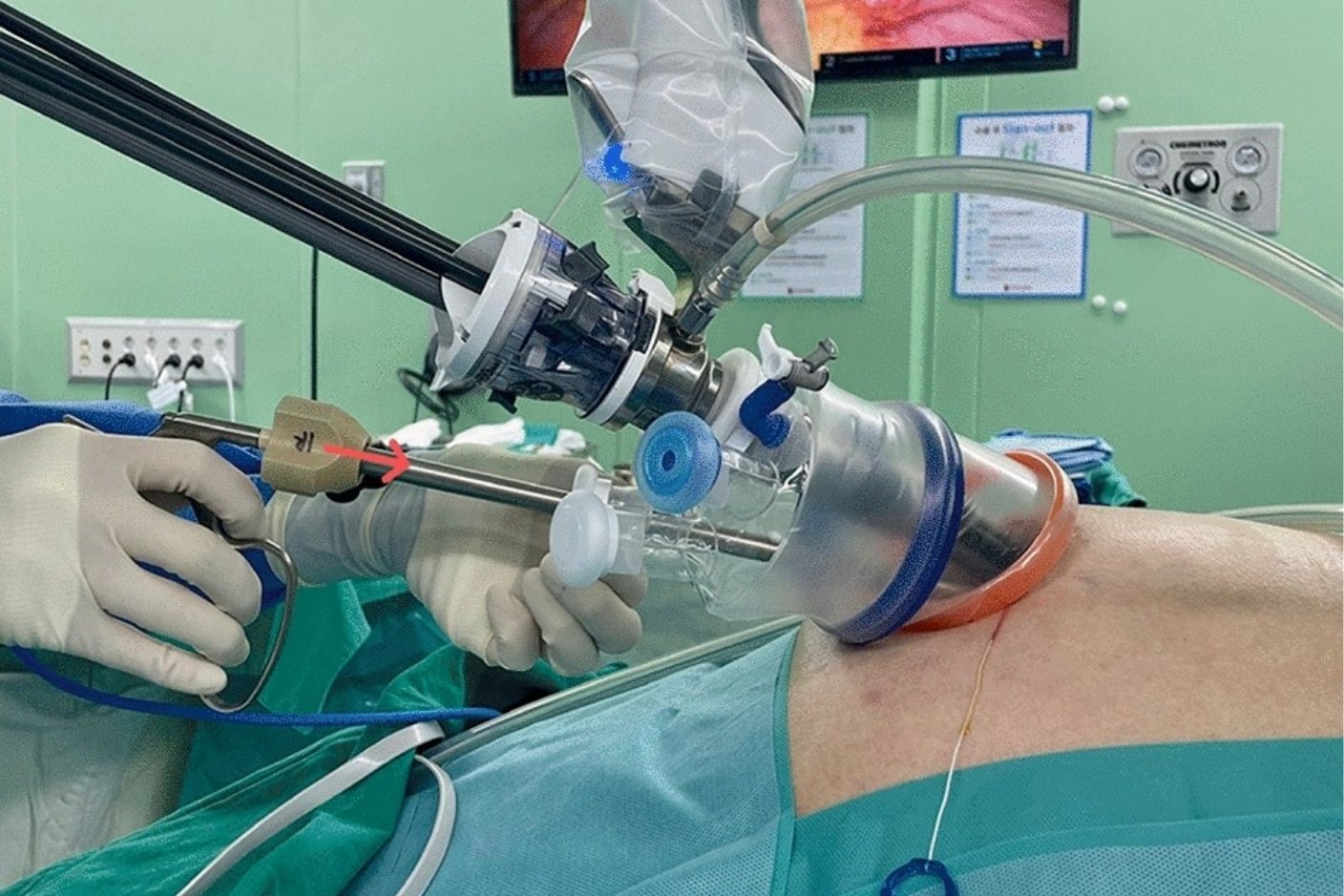
Robotic Gallbladder Surgery is a minimally invasive approach used to remove the gallbladder when surgery is required. The procedure is most commonly performed as a robotic cholecystectomy, in which the gallbladder is separated from the liver and surrounding structures and removed through small abdominal incisions.
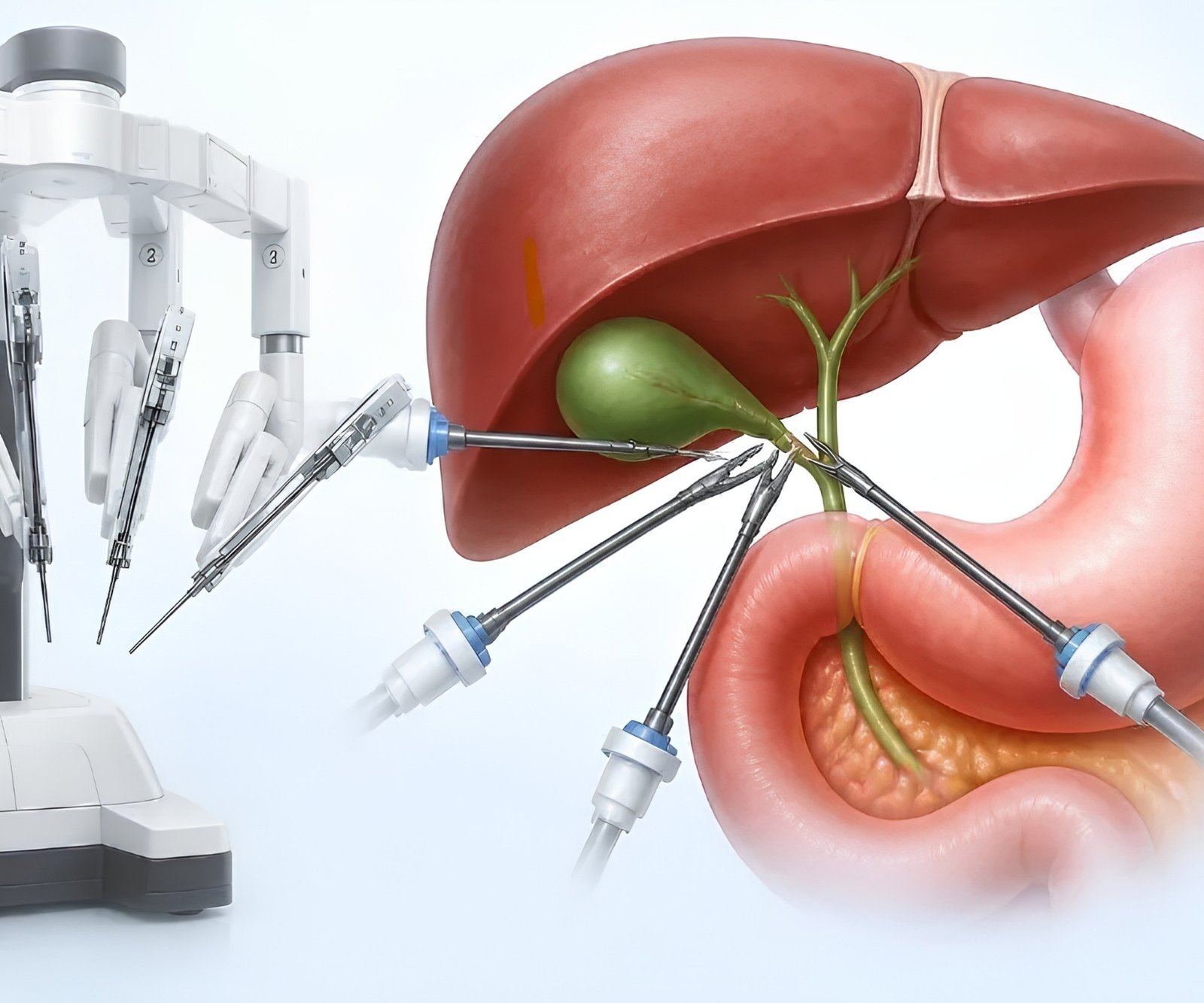
During Robotic Gallbladder Surgery, the surgeon operates from a console while controlling robotic instruments placed through small access points. A magnified three-dimensional camera provides a detailed view of the gallbladder, bile ducts and surrounding anatomy.
The robotic instruments allow controlled movements during dissection and help the surgeon work carefully around important structures. The gallbladder is then detached from its attachments and removed through one of the small incisions.
The robotic system does not perform the surgery independently. The surgeon remains responsible for identifying the anatomy, making surgical decisions and controlling every movement throughout the procedure.
When Is Robotic Gallbladder Surgery Considered?
Gallbladder removal is usually considered when gallbladder disease causes repeated symptoms, complications or other problems that are unlikely to settle with medication alone. Whether a robotic approach is appropriate depends on the patient’s condition, anatomy and surgical history. Robotic Gallbladder Surgery may be considered for selected cases involving:
01. Symptomatic Gallstones
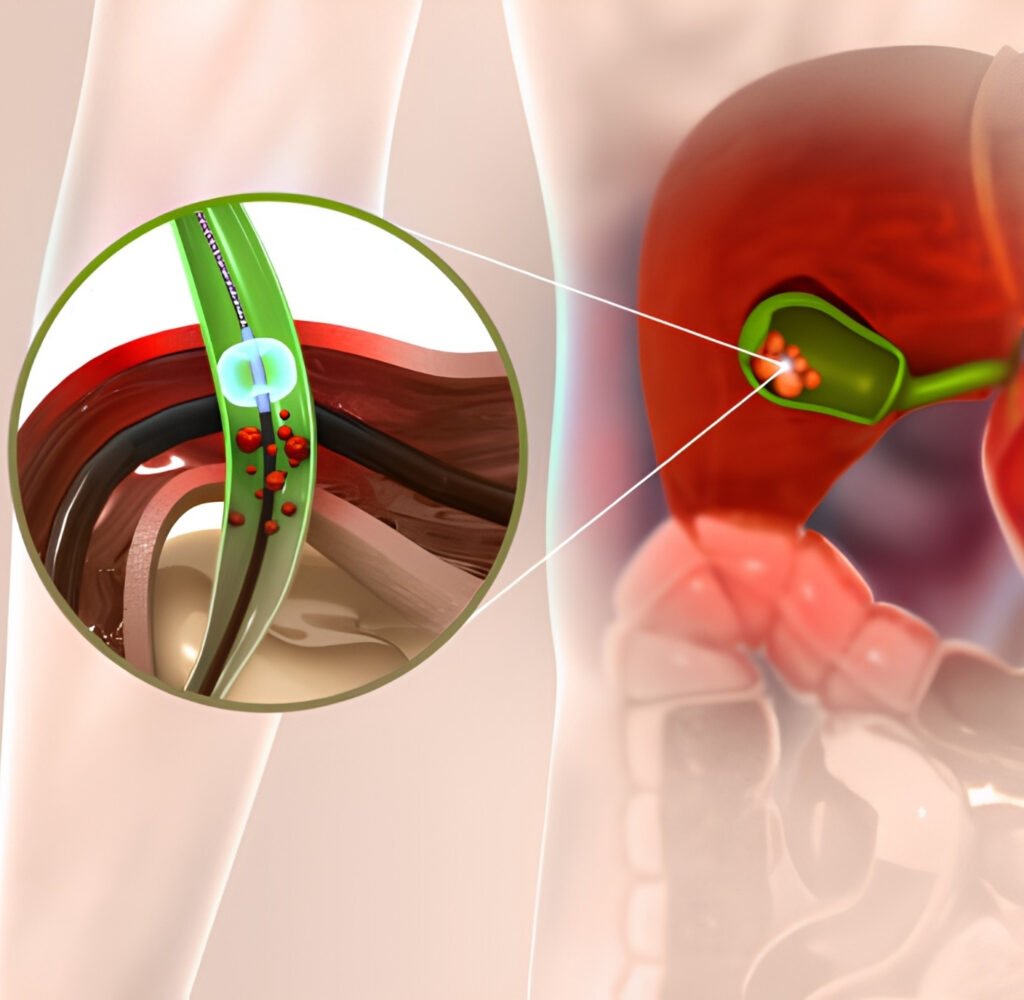
Gallstones causing repeated upper abdominal pain or digestive discomfort
02. Recurrent Gallbladder Attacks
Repeated episodes of pain or inflammation linked to gallbladder disease
03. Biliary Complications
Gallbladder-related conditions affecting normal bile flow or causing problems
04. Acute Cholecystitis
Inflammation of the gallbladder associated with significant pain and infection
05. Gallbladder Polyps
Selected polyps requiring surgical removal based on their size and clinical features
06. Chronic Gallbladder Disease
Long-standing inflammation or structural changes causing persistent symptoms
Evaluation generally includes a clinical examination and abdominal ultrasound. Blood tests may be advised, while additional imaging such as MRCP or CT may be recommended when bile duct stones, complicated inflammation or unusual anatomy is suspected. The decision to operate and the choice of surgical technique are made after considering the diagnosis, severity of disease and overall surgical requirements.
Robotic vs Laparoscopic Gallbladder Surgery
Robotic and laparoscopic cholecystectomy are both minimally invasive methods of removing the gallbladder. The main difference is how the surgeon controls the instruments and views the operative field.
|
Feature
|
Robotic Gallbladder Surgery
|
Laparoscopic Gallbladder Surgery
|
|---|---|---|
|
Visualization
|
Provides a magnified three-dimensional view of the gallbladder and surrounding anatomy.
|
Provides a high-definition camera view of the operative area.
|
|
Instrument Movement
|
Uses articulated instruments that allow wrist-like movements during dissection.
|
Uses long, relatively rigid instruments controlled directly by the surgeon.
|
|
Surgeon Position
|
The surgeon controls the instruments from a console beside the operating table.
|
The surgeon operates directly at the patient's side throughout the procedure.
|
|
Fine Dissection
|
Articulated instruments can support controlled movements around delicate anatomical structures.
|
Standard instruments provide established control for routine gallbladder dissection.
|
|
Suturing
|
Wristed instruments can assist when suturing or additional repair is required.
|
Suturing is possible when required but involves conventional laparoscopic instruments.
|
|
Technique Selection
|
May be selected when robotic access is considered appropriate for the surgical anatomy.
|
Remains a well-established approach for many routine gallbladder removals.
|
How is Robotic Gallbladder Surgery Performed?
The procedure is performed under general anaesthesia. Small abdominal incisions are made to introduce the robotic camera and instruments. The surgeon first examines the gallbladder and surrounding anatomy. The gallbladder is gently separated from the liver, and the structures supplying it are carefully identified. The cystic duct and cystic artery are secured and divided after the relevant anatomy has been clearly identified. The gallbladder is then separated from the liver bed using controlled dissection. Once completely detached, the gallbladder is placed in a retrieval bag and removed through one of the small incisions. The operative area is checked for bleeding or bile leakage before the instruments are withdrawn. The small abdominal incisions are then closed. In cases with significant inflammation, adhesions, previous abdominal surgery or unexpected anatomical findings, the procedure may require additional surgical steps. In some situations, conversion to conventional laparoscopic or open surgery may be considered when this provides a safer way to complete the operation.
Robotic Gallbladder Surgery Benefits
For selected patients, robotic surgery provides a minimally invasive route for gallbladder removal while giving the surgeon detailed visualization and controlled instrument movement. Robotic surgery is not automatically necessary for every gallbladder operation. Conventional laparoscopic cholecystectomy remains an established option, and the appropriate approach depends on the patient’s condition and surgical requirements.
01. Detailed Anatomical View
Magnified three-dimensional visualization helps the surgeon identify the gallbladder and surrounding structures.
02. Controlled Dissection
Articulated instruments allow measured movements while separating the gallbladder from surrounding tissues.
03. Precise Instrument Movement
Wristed robotic instruments provide flexibility during dissection within the confined abdominal space.
04. Small Incisions
The operation is performed through small abdominal access points rather than a large abdominal incision.
Gallbladder Removal Recovery Time
Recovery after gallbladder removal is generally influenced by whether the procedure was straightforward or complicated by inflammation, infection, adhesions or other findings.
First 24 Hours
Patients are monitored after anaesthesia and are encouraged to begin sitting up and walking as tolerated. Pain, nausea and other immediate postoperative concerns are assessed.
First Few Days
Mild abdominal soreness, shoulder-tip discomfort or temporary digestive changes can occur while the body adjusts after surgery.
First Week
Light household and routine activities can generally be resumed progressively, depending on comfort and wound healing.
Following Weeks
Most everyday activities can be increased gradually. The pace depends on the extent of surgery and individual recovery.
Returning to Exercise
Walking can usually be increased early, while strenuous exercise and heavy lifting are resumed progressively after adequate healing.
Follow-Up
A follow-up assessment helps review the incision sites, digestive symptoms and overall recovery after gallbladder removal.
FAQs About Robotic Gallbladder Surgery
Does every gallstone require gallbladder removal?
No. Gallstones that do not cause symptoms may not always require surgery. Removal is generally considered when stones cause significant symptoms or complications, based on the clinical assessment.
Is robotic gallbladder surgery the same as robotic cholecystectomy?
Yes. Robotic cholecystectomy refers to removal of the gallbladder using a robotic surgical platform. The term robotic gallbladder surgery is commonly used to describe the same procedure.
Can I live normally without a gallbladder?
Yes. The gallbladder stores bile, but the liver continues to produce bile after the gallbladder is removed. Most people gradually return to their usual diet and daily activities after recovery.
How long does robotic gallbladder surgery take?
Operating time varies depending on the degree of inflammation, adhesions, anatomy and other findings. An uncomplicated gallbladder removal generally takes less time than a technically difficult procedure.
Can this surgery be performed when there is severe inflammation?
It may be possible in selected cases, but significant inflammation can make the anatomy more difficult to identify. The surgical approach is determined according to the findings and what is safest for completing the operation.
How soon can I return to work after gallbladder removal?
Return to work depends on the type of work and individual recovery. People with desk-based work may return sooner than those whose jobs involve heavy physical activity.
Choosing the Right Approach for Gallbladder Removal
At Sunshine Surgical Hospital, Robotic Gallbladder Surgery is considered for selected patients where robotic access is appropriate for the planned gallbladder removal.