
Laser Piles Treatment in Ahmedabad
What Is Laser Piles Surgery?
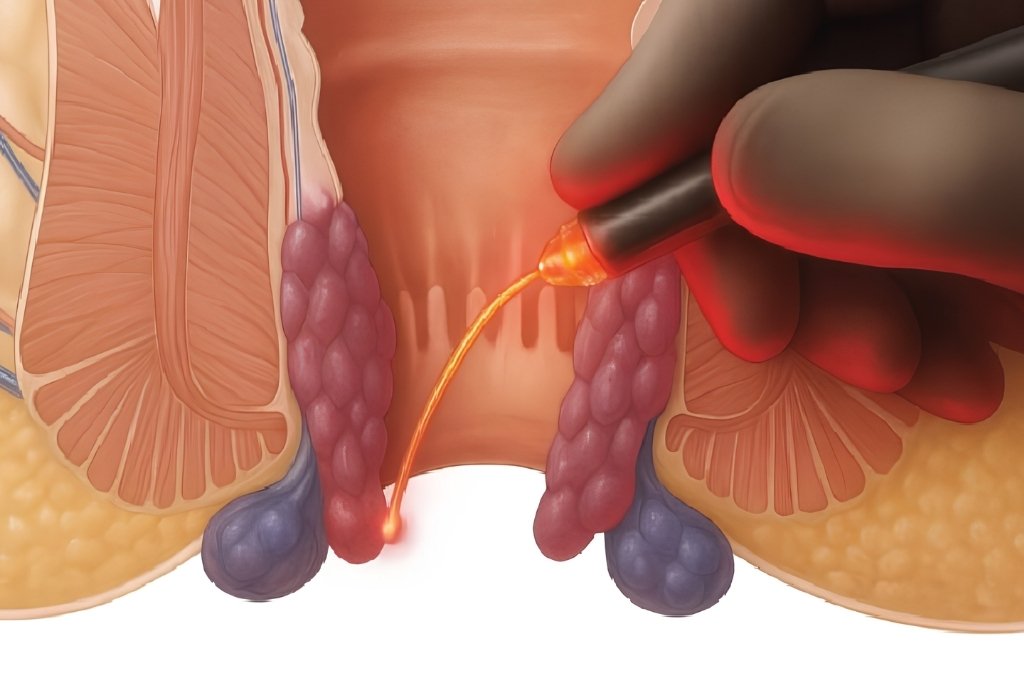
Laser Piles Surgery is a minimally invasive procedure for treating selected haemorrhoids using controlled laser energy. Instead of removing the entire haemorrhoidal tissue in the conventional manner, the laser may be used to reduce the size of the internal haemorrhoid and close or shrink the feeding blood vessels.
The procedure is performed through the anal canal, usually without large external incisions. The exact technique depends on whether the piles are internal or external, their grade, the degree of prolapse and whether other anorectal conditions are present.
For patients looking for Laser Piles Treatment in Ahmedabad, proper examination is important before deciding whether a laser procedure is suitable.
When Is Laser Piles Treatment Needed?
Laser treatment may be considered when haemorrhoids continue to cause symptoms despite appropriate dietary and medical measures. Common situations include:
01. Recurrent Bleeding
Repeated bleeding during or after bowel movements may require procedural treatment.
02. Persistent Discomfort
Ongoing irritation, pressure or discomfort can occur when conservative measures do not provide sufficient relief.
03. Recurrent Haemorrhoids
Repeated episodes may indicate the need for a more definitive treatment approach.
04. Prolapsed Piles
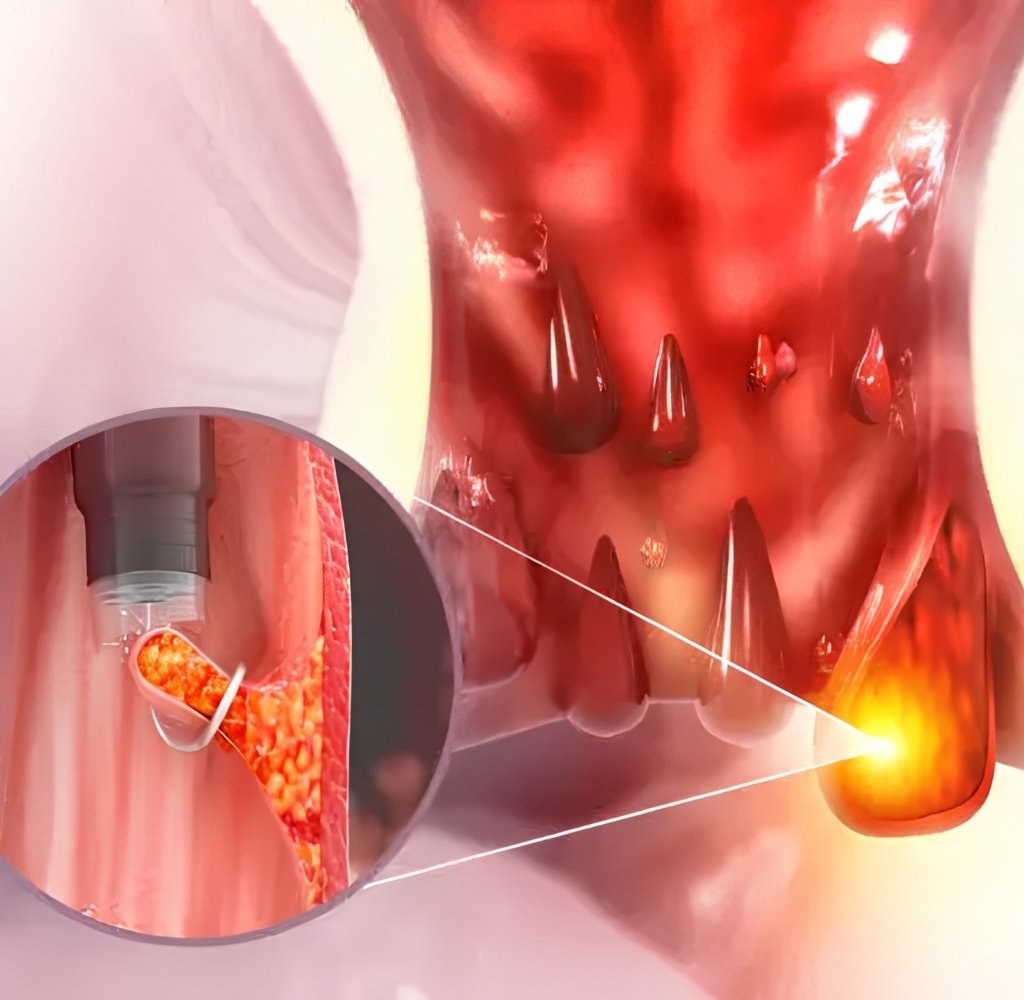
Internal haemorrhoids that protrude during bowel movements may need intervention depending on their grade.
05. Failed Medical Measures
Persistent symptoms despite fibre, fluids, bowel habit changes and prescribed medicines may require further evaluation.
06. Selected Advanced Piles
Certain grade II, III or other symptomatic haemorrhoids may be considered for laser or another procedural technique based on examination.
The choice of treatment depends on the grade of piles, location, symptoms, previous treatment and the condition of the surrounding anal canal.
Laser vs Surgery for Piles
Laser treatment and conventional piles surgery use different approaches to treat haemorrhoids. The choice depends on the grade of piles, degree of prolapse, symptoms and the condition of the surrounding tissue.
|
Feature
|
Laser Piles Treatment
|
Conventional Piles Surgery
|
|---|---|---|
|
Treatment Method
|
Uses controlled laser energy to shrink selected haemorrhoidal tissue and reduce its blood supply.
|
Surgically removes the affected haemorrhoidal tissue through an excisional technique.
|
|
Tissue Disruption
|
Generally involves limited tissue disruption and no large external surgical wound.
|
Involves removal of haemorrhoidal tissue, followed by healing of the surgical area.
|
|
Suitable Cases
|
May be considered for selected internal haemorrhoids based on their grade and clinical findings.
|
May be considered for larger, advanced or significantly prolapsed haemorrhoids.
|
|
Postoperative Discomfort
|
Usually associated with less wound-related discomfort in appropriately selected cases.
|
May involve greater discomfort during the initial healing period because of tissue removal.
|
|
Return to Activities
|
Many suitable patients can resume routine activities relatively early after treatment.
|
Recovery may take longer depending on the extent of tissue removal and healing.
|
|
Treatment Selection
|
Depends on piles grade, anatomy, symptoms and whether laser treatment is clinically appropriate.
|
Depends on severity, prolapse, anatomy and whether excisional surgery is required.
|
Piles Treatment Without Surgery
Not every case of piles requires a surgical procedure. Early or mildly symptomatic haemorrhoids can often be managed with measures that improve bowel habits and reduce pressure on the anal veins. Depending on the symptoms, treatment may include:
- Increasing dietary fibre through food or prescribed fibre supplements
- Drinking adequate fluids throughout the day
- Avoiding prolonged sitting on the toilet
- Preventing excessive straining during bowel movements
- Treating constipation and maintaining regular bowel habits
- Using prescribed medicines or local treatments when appropriate
Benefits of Laser Piles Treatment
The benefits depend on the grade and type of piles, and laser treatment should be selected only when it is clinically appropriate. When appropriate for the type of haemorrhoid being treated, Laser Piles Treatment may offer several practical advantages:
01. Minimal Tissue Trauma
Laser energy allows treatment with limited disruption to surrounding tissue.
02. Less Postoperative Discomfort
Selected patients may experience less pain compared with conventional excisional surgery.
03. Small Treatment Area
The procedure does not generally require a large external surgical wound.
04. Earlier Mobilisation
Patients can usually begin walking and routine movement soon after treatment.
Laser Piles Surgery Recovery Time
Recovery after Laser Piles Surgery is generally shorter than recovery from procedures involving extensive haemorrhoidal tissue removal, although individual recovery varies.
First 24 Hours
Most patients are monitored for pain, bleeding and urination before going home or continuing recovery.
First Few Days
Mild discomfort, a sensation of pressure or minor bleeding may occur as the treated area heals.
First Week
Light daily activities can often be resumed gradually, while bowel movements should be kept soft.
Following Weeks
Symptoms continue to settle as the treated haemorrhoidal tissue reduces and healing progresses.
Returning to Exercise
Walking can usually begin early, while strenuous exercise and heavy lifting should be resumed according to medical advice.
Follow-Up
A review may be advised to assess healing, symptom improvement and bowel habits.
FAQs About Laser Piles Treatment
Is Laser Piles Treatment painful?
Laser treatment generally causes less postoperative discomfort than conventional excisional surgery, but some soreness, pressure or discomfort can occur during the initial healing period.
How long does Laser Piles Surgery take?
The procedure is usually relatively short, but the duration depends on the number and type of haemorrhoids being treated and the technique selected.
How soon can I return to work after laser treatment?
Many patients can return to light daily activities relatively quickly, but the timing depends on symptoms, the type of work and the extent of treatment.
Can all types of piles be treated with a laser?
No. Suitability depends on the grade, size, location and degree of prolapse. Larger or advanced haemorrhoids may require another surgical approach.
Can piles be treated without surgery?
Mild or early haemorrhoids may improve with fibre, fluids, constipation management and better bowel habits. Persistent or advanced piles may require a procedure.
Can piles come back after laser treatment?
Recurrence is possible because haemorrhoidal disease is influenced by constipation, straining, bowel habits and other factors.
Get Your Piles Evaluated
A proper evaluation can help plan the procedure and recovery according to the grade and condition of the haemorrhoids. Book an Appointment for Laser Piles Treatment in Ahmedabad